
No Fees Unless We Win
No Fees Unless We Win

personal injury lawyer
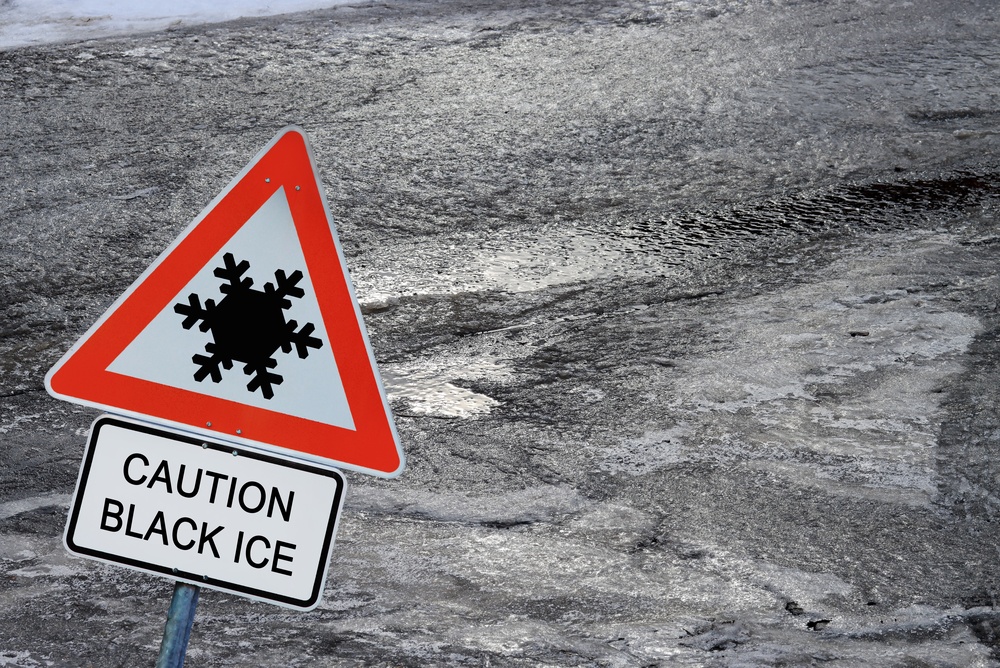
Black ice has a way of catching Seattle drivers off guard, turning an ordinary commute into a sudden loss of control before anyone has time to react. When a car spins out on an unexpected patch of ice, the instinct is to chalk it up to bad luck, but Washington law looks at it differently.
Determining fault in a black ice accident comes down to whether a driver adjusted speed and attention to match the road conditions, not simply whether ice was present. A skid across the SR-520 floating bridge or near an overpass in Issaquah can happen in an instant, yet insurers still expect drivers to anticipate winter hazards. At Colburn Law – Accident and Injury Lawyers, our car accident lawyers help injured Seattle drivers understand how fault gets assigned and what compensation they may pursue.
Clients are often surprised by the answer, and it is easy to understand why. So yes, a driver who slides on black ice in Washington can still be found at fault, even though many never saw it coming. Washington law places the responsibility on every driver to adjust speed and behavior to match the road ahead, icy or not, and courts and insurers tend to treat winter weather as something drivers should have anticipated.
What matters most is what the driver did in the moments before losing control: were they going too fast for the conditions, following too closely, or slow to react? Those are the details that shape how a black ice accident’s fault is determined, and what we look at closely in every case we take on.
But what really is black ice? It is a thin, nearly transparent layer of ice that is easy to mistake for a wet patch of pavement, which is precisely what makes it so dangerous. It tends to form on bridges, overpasses, and shaded roads before the rest of the roadway shows any sign of freezing.
The numbers back up what we see in these cases: the Federal Highway Administration reports that 24 percent of weather-related crashes happen on snowy, slushy, or icy pavement, contributing to roughly 1,300 deaths and 116,800 injuries nationwide every year. Here in Seattle, that risk shows up most on the SR-520 floating bridge, elevated I-90 toward the mountain passes, and overpasses near Issaquah, which freeze before the road below them does.
You may wonder how fault is actually determined when ice is involved. We ask whether each driver exercised reasonable care, given the conditions. Investigators and insurers weigh speed, following distance, tire condition, and reaction time against what a careful driver would have done.
Black ice can be raised as a defense, but it rarely erases fault. What matters is whether the driver could have anticipated the conditions, given the season, temperature, and location, such as a shaded overpass known for freezing early. A driver going a safe speed with a reasonable following distance may reduce their share of fault. One who was speeding or driving aggressively will likely keep most of it.
The answer is yes. A municipality or contractor can be liable if they knew about a recurring ice hazard and failed to treat it, sand it, or warn drivers about it. Washington cities and the state transportation department carry some responsibility for known problem areas, though these claims are harder to prove, since government entities face shorter filing deadlines and stricter notice requirements. This is part of why a black ice accident fault can involve more than one responsible party.
When multiple vehicles are involved, we still look at fault individually for each driver, not the pileup as a whole. These crashes often involve three or more vehicles sliding into one another within seconds of the first loss of control. A driver following too closely before the initial skid may bear more responsibility than one struck from behind while already stopped, and we reconstruct the sequence of impacts to assign those percentages.
If you shared some blame in the crash, Washington’s pure comparative fault rule still allows you to recover compensation. Under RCW 4.22.005, each party’s damages are reduced by their own percentage of fault, rather than being barred once fault reaches a certain threshold. A driver found 30 percent responsible can still recover 70 percent of their damages. This comes up often in black ice cases, where fault splits between multiple drivers reacting to the same hazard, and that split determines which insurance policy pays.
We often walk clients through several types of coverage that can apply, depending on how fault gets assigned. Washington drivers must carry liability insurance, according to the Washington State Department of Licensing, with minimum coverage of:
If another driver slid into you, their liability coverage may pay your claim, subject to any percentage of fault assigned to you. Personal injury protection, or PIP, covers your own medical bills regardless of fault, and underinsured motorist coverage becomes essential when the at-fault driver carries insufficient insurance.
When you are involved in a black ice accident, here is what we suggest:
Documentation created early carries more weight with insurers than an account pieced together weeks later, which is why we encourage clients to reach out as soon as possible.
A black ice crash raises real questions about who is at fault, especially while you are dealing with injuries and vehicle damage. At Colburn Law – Accident and Injury Lawyers, we can help answer those questions by investigating what happened and pursuing the compensation you may be owed. Call 206-919-3215 to schedule a free consultation.

This page has been written, edited, and reviewed by a team of legal writers following our comprehensive editorial guidelines. This page was approved by attorney, Greg Colburn who has more than 20 years of legal experience as a Washington Personal Injury Attorney.
Key Takeaways Washington requires a police report only when a crash causes injury, death, or notable property damage. Calling 911 and legally reporting a...
Key Takeaways Insurers refuse whiplash claims over fault, causation, treatment timing, or evidence gaps. Delayed symptoms or normal imaging do not disprove a whiplash...
Key Takeaways Call 911 immediately when injuries appear, even minor ones, since adrenaline often masks pain for hours. Washington requires drivers to exchange information...
Key Takeaways Settlements for straightforward car accidents in Seattle with clear liability and minor injuries typically resolve within three to six months. Complex Seattle...
We will come to your home, a coffee shop, or your hospital room, whichever works best for you. We’ll discuss your legal options, and if we should decide to move forward, we will offer our services on a contingency-fee basis.
 Message Us
  Call Us